The One-Voice Myth: Why Group Work Can Keep Its Differences
Group artwork can keep distinct styles without looking scattered: agree on a shared purpose, then use simple visual cues to connect each contribution.
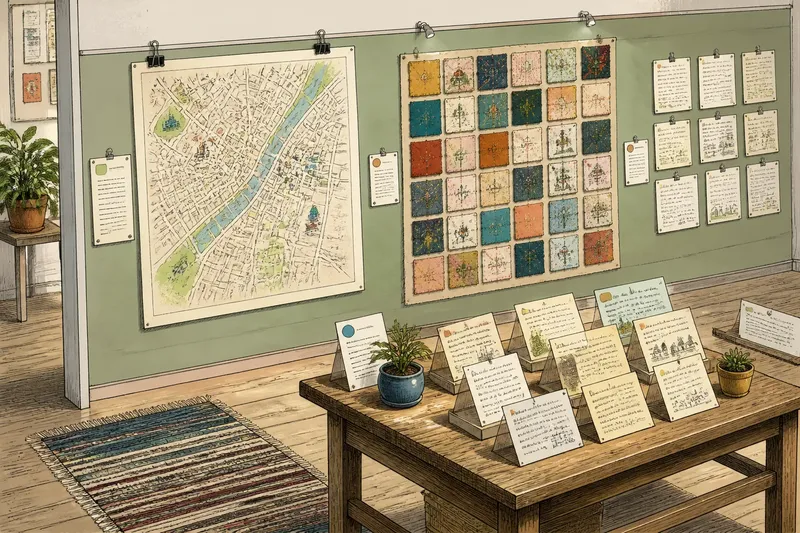
Group artwork can keep distinct styles without turning into a jumble. In a community exhibition, a stitched map, a charcoal drawing and a handwritten memory can each hold their own character when the project gives them a shared place and a clear way to meet.
Make the display work
Rather than asking every contributor to echo the same visual language, decide how the pieces will sit together in the room. A consistent backing colour, a common label format or an intentional sequence can make a display feel considered while leaving each artwork untouched.
Try arranging work by location, material or the route a visitor takes through the space. Think of it like a noticeboard: different messages remain distinct, while the board and its layout help people read them as parts of one gathering.
Choose a useful structure
The structure should solve a practical problem, not dictate what makers create. A shared frame, table layout or hanging system can clarify where each contribution belongs. For a digital collection, a simple gallery page with consistent captions can do similar work.
Before inviting contributions, tell people what the structure allows: approximate format, how work will be displayed, and whether pieces may be grouped or rearranged. Keep the invitation open about subject and style unless the project genuinely needs a boundary, such as work relating to a particular place.
Plan the visitor’s route
Order affects how an audience encounters a collection. A display might begin with a map, move through personal responses, then end with a shared invitation or question. The sequence can create a sense of movement without asking the works themselves to match.
Labels help visitors make connections they might otherwise miss. Keep them brief and readable, and let makers describe their own contribution in their own words. If a piece includes delicate or unfamiliar materials, a label can also offer useful context without turning the artwork into an explanation exercise.
Keep the arrangement flexible
Install a first arrangement, then walk through the space as a visitor would. Notice whether one piece is hidden, a label is hard to find or the sequence feels confusing. Adjust placement or signage before asking an artist to change the work.
Say a library group is preparing a display with a hand-drawn street map, a collection of fabric squares and short notes about favourite meeting places. They place the map at the entrance, arrange the fabric by location, and put the notes beside the relevant sections. During a walk-through, they notice that the smallest notes are easy to overlook, so they move them to a table at eye level and add clear headings. The resulting display gives visitors a more legible route while preserving each contribution.
Set fair display choices
Decide who can make installation changes and which changes need a contributor’s permission. Moving a frame to improve access is different from cropping a drawing or rewriting its label. Make that distinction clear before the work arrives, and consult the maker about edits to their contribution.
For a public venue, ask the host about access, mounting and material requirements. If a display condition means a work cannot be shown as planned, explain the constraint and discuss alternatives with its maker. A qualified venue or installation professional can advise where specialist safety or conservation issues arise.
Questions about display design?
How can unrelated artworks feel connected?
Use the exhibition’s layout, labels, sequence or shared setting to show why the works belong together. The connection can be a place, a question or the way visitors move through the display, rather than a matching palette.
Should every contribution have the same size?
Not necessarily. Consistent mounting or spacing can make varied sizes easier to display, but the arrangement should suit the work and the available space. Explain any format limits in the invitation so contributors can decide what they can make.
What if a display feels crowded?
Check whether the problem is the number of works, their spacing, the labels or the visitor route. Try rearranging the display or using a second location before excluding a contribution, and discuss any proposed change with the maker.
Use a display check
Before opening, walk the route and check each item below. For every observation, make the stated decision or choose the alternative action; record any unresolved issue for the person responsible for installation.
- Check whether every artwork is visible from the intended viewing area; if one is hidden, then change its position, or use a clearer display location.
- Check whether each label sits beside the correct work; if a label is ambiguous, then add a maker-approved identifier, or move the label closer.
- Check whether visitors can follow the planned sequence; if the order is unclear, then add headings, or rearrange the works into a more readable route.
- Check whether small text and details can be read at the available viewing distance; if not, then provide a larger label or move the work to a closer viewing point.
- Check whether the mounting method meets the venue’s instructions; if it does not, then use an approved method, or ask the venue for an alternative before opening.
- Check whether contributors have approved any edits to their work or wording; if approval is missing, then restore the original, or pause display of the affected item until its maker responds.
Let the setting connect
A shared room, a well-planned route and readable labels can give varied work a coherent public life. For group artwork, the most useful design choice may be not another mark on the canvas but a thoughtful way to let visitors encounter each contribution.
When planning the next display, decide first what visitors need to see, understand or find. Then shape the arrangement around that experience, leaving the makers’ distinct choices intact wherever the setting allows.